
Build your company's apps with AI. Safely.
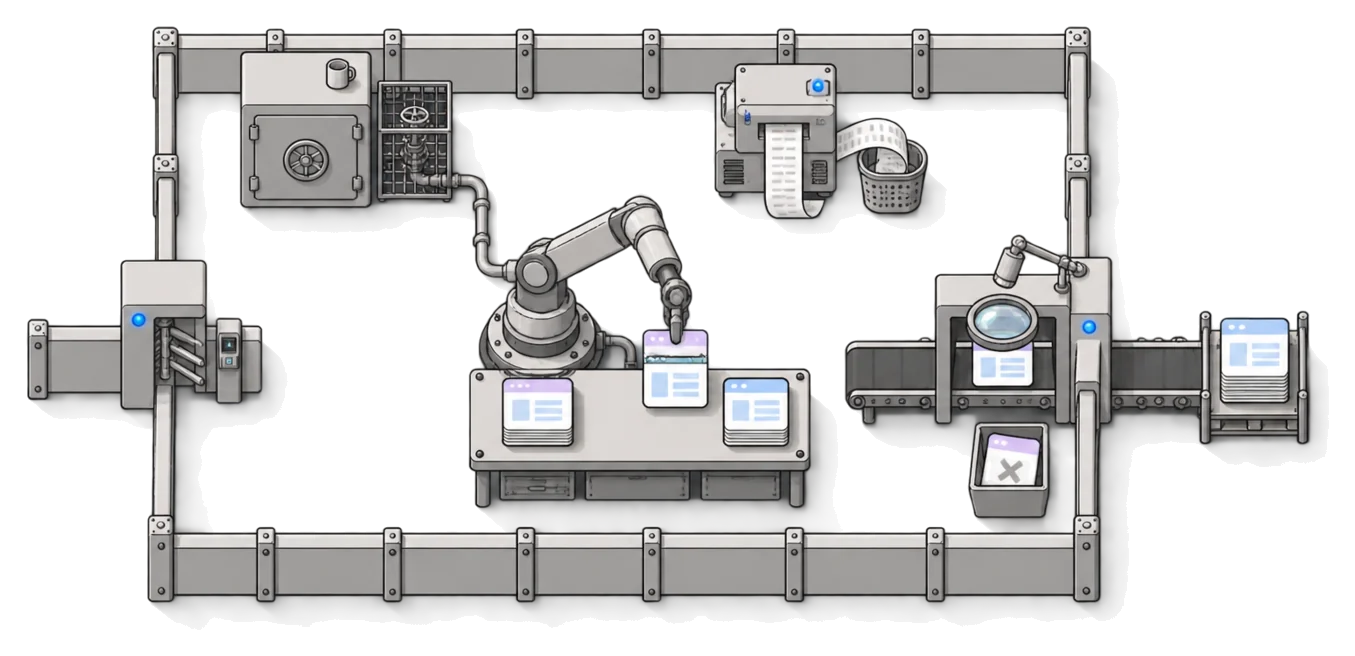
Contember Fabrika is a platform your company builds its own apps on, and a team that reviews every change. Sign-in, permissions and deployment are handled by the platform, not by the app's code.
- 1
One way in
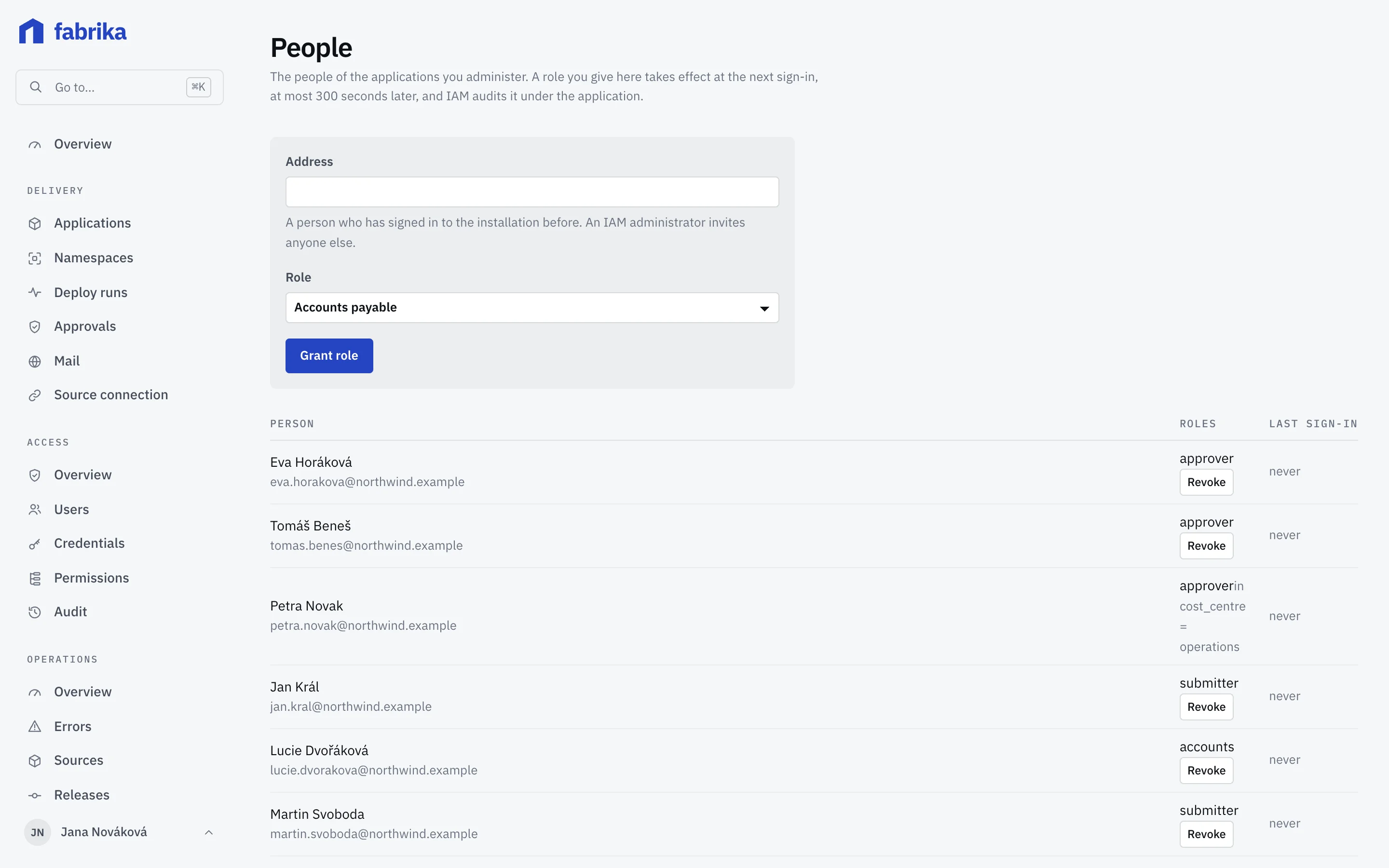
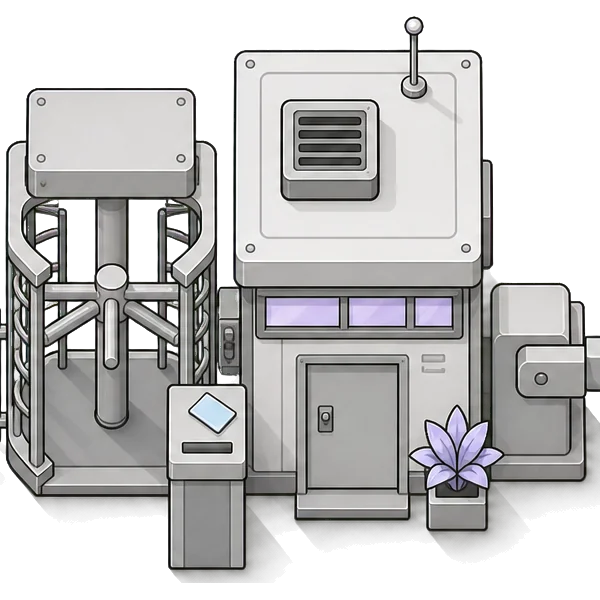
Apps have no public address of their own. Everyone comes in through the platform's sign-in.
- 2
AI builds inside
Your person builds screens and logic with AI, working from the brief and the code, not live data.
- 3
Keys held apart
Passwords and keys are held by the cloud platform. Each app sees only its own.
- 4
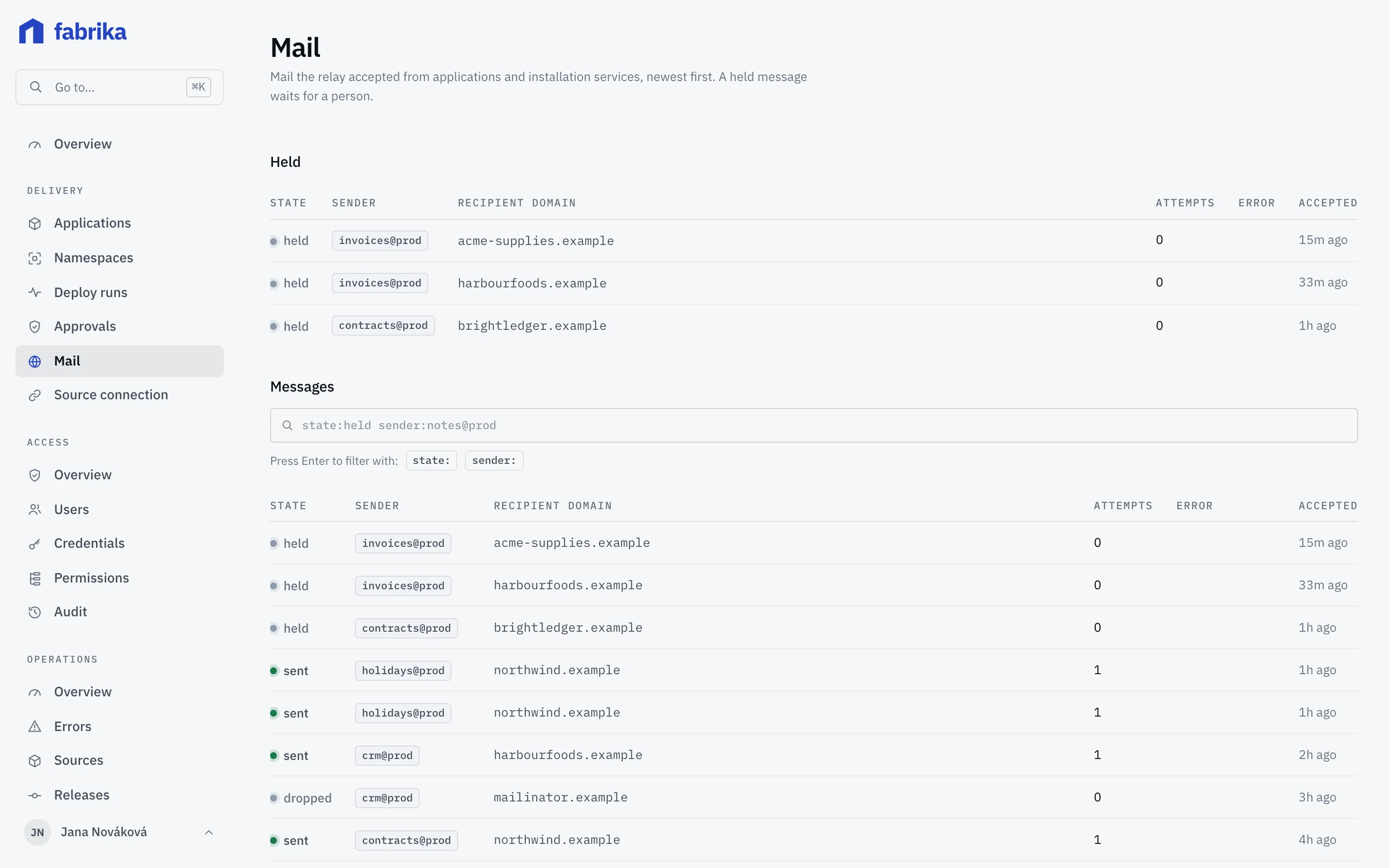
A record
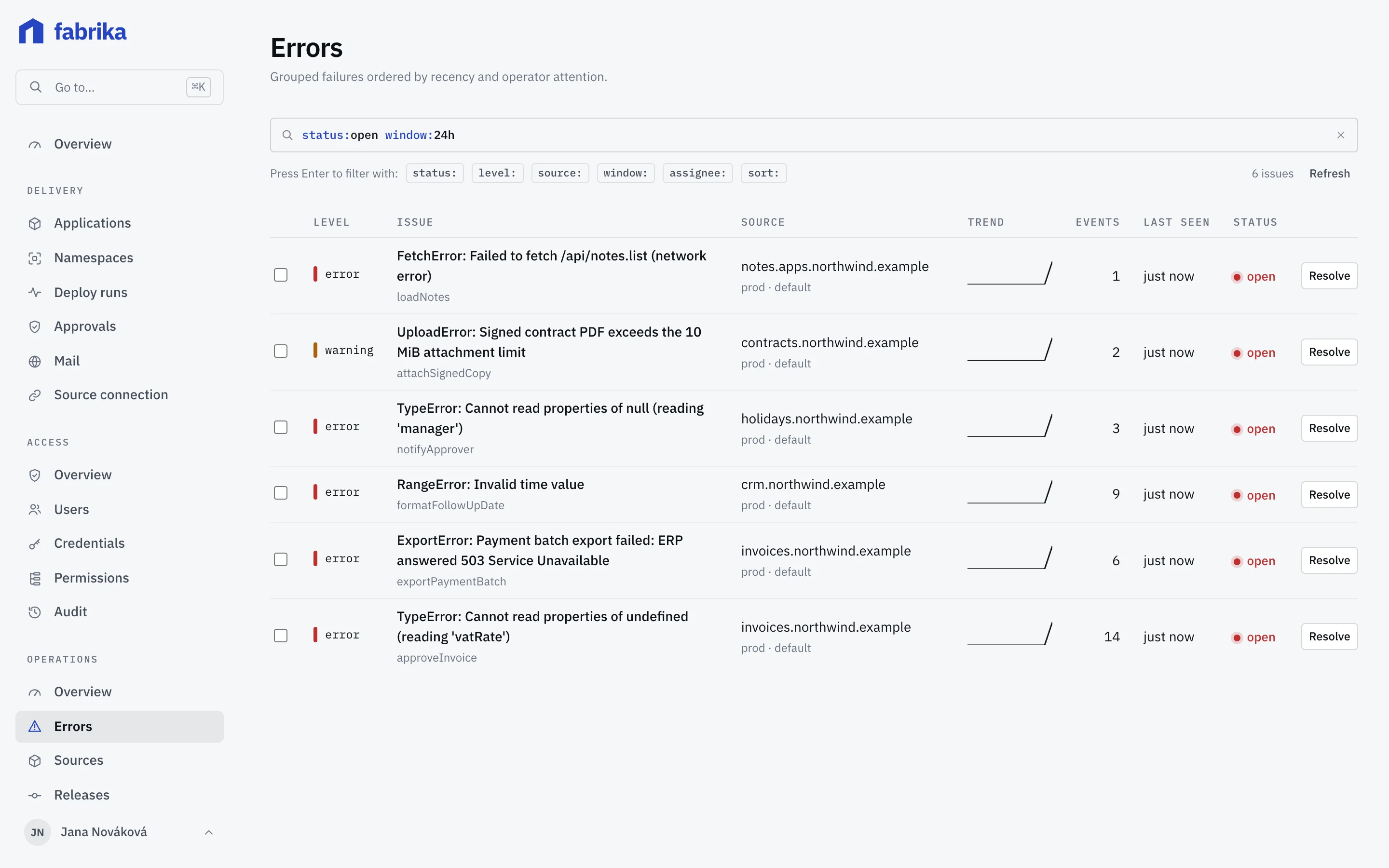
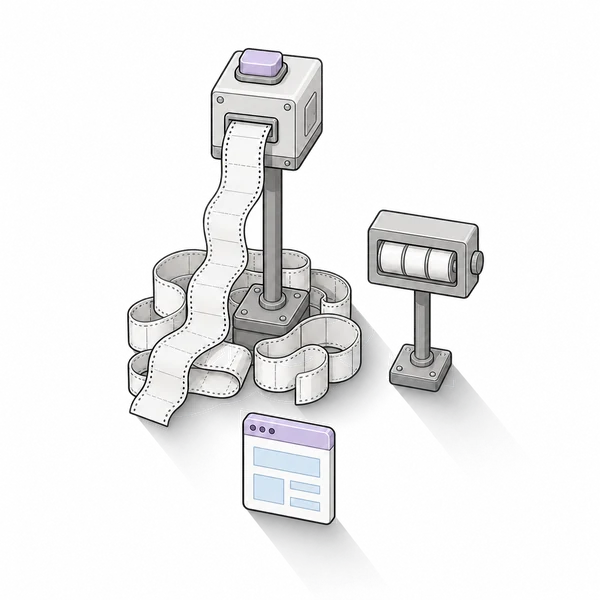
Sign-ins, access changes and every deployment are recorded. The console shows who did what, and when.
- 5
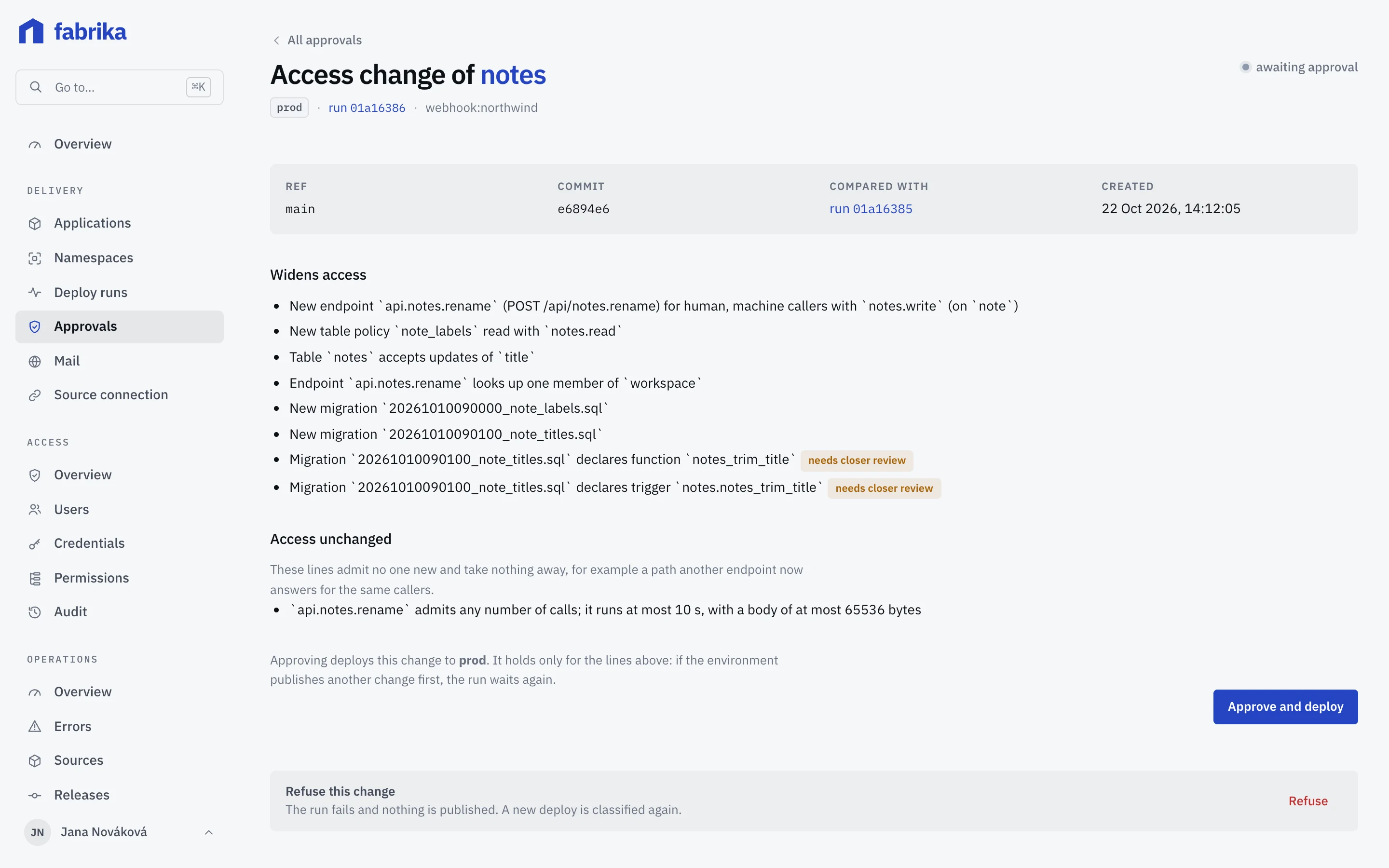
Reviewed changes
We go through every change before it's deployed. What doesn't pass doesn't go live.
Your people are already building apps. Who's watching what runs?
With AI, a capable colleague can put together a working app in a few days. And it often works. What turns a prototype into software you can trust with customer data doesn't come from the AI, though: sign-in, permissions, deployment, reviewed changes, and someone who keeps it running.
AI made writing software cheaper. It didn't make owning it cheaper.
“We're 90 percent done. Finish the rest for us.”
That's what companies bring to developers these days. The rest is authorisation, a data model, migrations, deployment, logging and GDPR. Developers say it isn't ten percent of the work. It's most of it.
Lupa.cz, 2026 ↗of tested tasks with a vulnerability
In 45 % of tested coding tasks, AI models wrote code with a vulnerability from the OWASP Top 10. Newer models write more correct code, not more secure code.
Veracode, 2025 ↗of IT leaders know what's running
Only 5 % of IT and security leaders know which AI-built tools run in their production. 22 % have already had an incident caused by one.
Retool, survey 2026 ↗“I've seen AI coding. But who's going to maintain it here?”
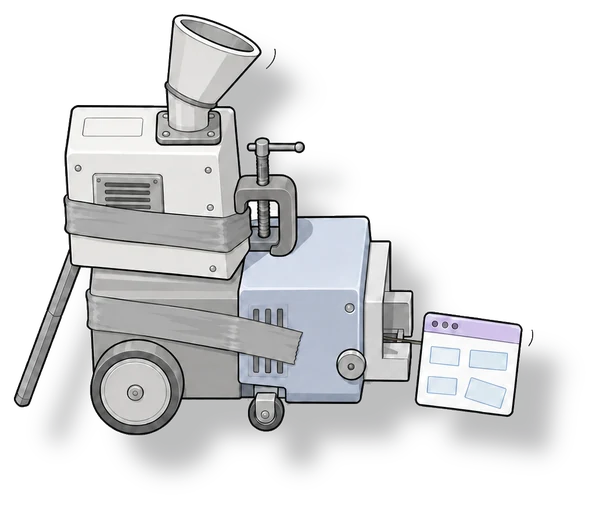
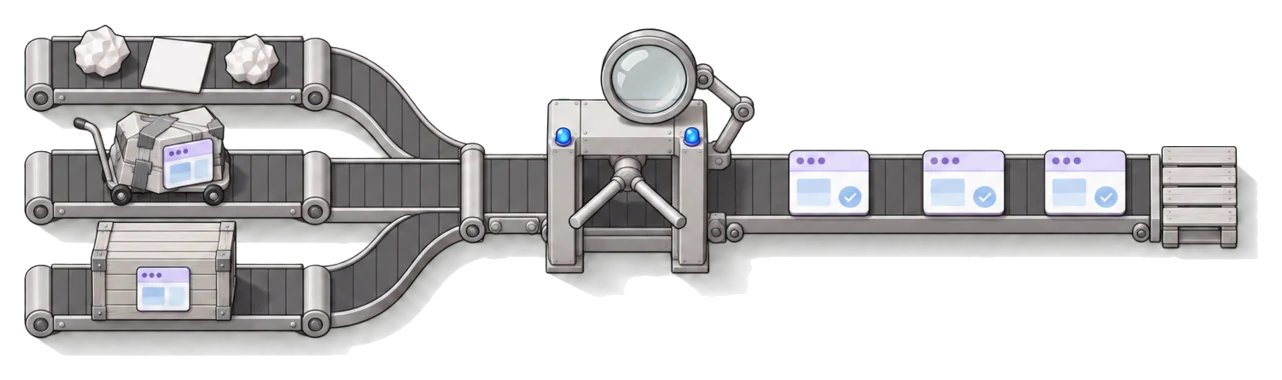
Almost anyone can generate something these days: a nephew, a freelancer, a capable colleague. Without access management, reviewed changes and maintenance, it turns into shadow IT nobody knows about, and it ends the day its author leaves. Fabrika is that second half: the platform enforces the rules, we review the changes.
How we handle security →You build the apps. The platform enforces the rules.
Fabrika has three parts. A platform that runs in your cloud account and takes care of everything that repeats across apps and mustn't go wrong. A way of working your person uses to build on it with AI. And our team, which reviews every change and keeps operations running.
Your apps
Screens, forms, the rules of your process. This is where the AI does its work, from the brief and the code, not from your live data.
The platform
Sign-in with your company account, say Google or Microsoft, roles and permissions, app keys and passwords, deployment from Git, and a record of sign-ins, access changes and deployments. Apps have no public address of their own: the only way in leads through the platform.
Review and operations
We go through every change before it's deployed, and each version comes with a report of what we checked. We patch, watch for outages and help when something goes wrong.
Your infrastructure
We set up the cloud account in your company's name, with Cloudflare or Zerops, or AWS if you prefer. The code, the data and the domains are yours, and the system keeps running without us.
Three ways into Fabrika.
Fabrika is the platform and our review of every change. How the first app gets onto it is up to you. Each way starts with setting Fabrika up: the platform in your cloud account, the rules for working with AI, and a short training. It's some work, but usually not much.
We build the first app with you
For companies starting from scratch. On Monday we map one process with the people who run it, from Tuesday to Thursday we build, on Friday the app runs for real. The person who'll build your next apps is there all week and sees how it's done.
You bring an app you already have
It was built in Lovable, with Cursor or Claude Code, by a freelancer or an agency. We go through the code and make small changes so the platform takes over sign-in, permissions, keys and deployment. Then we help you deploy it to Cloudflare or Zerops, and the data comes along. One condition: it has to be code that runs outside the tool it was made in. We can't take over apps clicked together in Bubble and similar tools.
How a takeover works →Your developers or agency build
You already have someone who builds for you, in-house or at a supplier. They build on Fabrika, and operations, change review and the SLA sit with us. You don't have to sort any of that out with them, and they don't have to run anything.
Who answers for what →Whichever way you come in, it ends up the same: the apps run in your account, the platform handles sign-in, permissions and deployment, and every change goes through our review.
Sound familiar?
Four situations companies come to us with most often.
You're already building with AI
Someone at your company built an app with AI, and the business quietly runs on it. But nobody manages who has access, and it ends the day its author leaves. You don't have to throw it away. We take it over: small changes so the platform handles sign-in and deployment, the data comes along, and your person keeps developing it with our review behind them.
How a takeover works →
People want apps, IT has to answer for them
A department wants a tool now, IT is supposed to approve it and then vouch for it. With no capacity for development, the only safe answer is no. Fabrika gives IT what it needs: sign-in and permissions in one place, every change reviewed, and a record of everything that was deployed.
Security for IT →
You're escaping spreadsheets
Key processes live in Excel and in email. It works for a long time, right up until nobody knows which version is current and the most important spreadsheet lives in one person's head. The fix doesn't have to take half a year. The first app can be running in a week.
What to use instead of a spreadsheet →
Only one agency can change your system
The system works, but only one vendor understands it, and they're busy right now. Every change takes months. We can take a system like that over and modernise it step by step. This time with the code, the data and the infrastructure in your hands.
When your developer or agency builds →What about the systems you already have?
Nothing gets thrown out and nothing migrates in one big bang. The first app is built alongside what you use today and connects to your data where it makes sense: accounting, warehouse, e-shop. What works stays. What holds you back gets replaced gradually, one process at a time.
What gets made, and how fast
The pattern for anything where one person asks and another approves: holidays, business trips, small purchases.
The pattern for any register: contracts, vehicles, equipment, certificates. A record card, deadlines, reminders.
Field entries on a phone: trips, work done, quick reports. Anything written on paper today and retyped later.
A document arrives, makes its approval rounds, gets matched. A purchase request or a production requisition works the same way.
Enquiries, offers, open deals. Not a hundred-field monster: exactly the steps your sales actually takes.
Hours by project, straight into billing. The same shape works for machine logs, shifts or service visits.
A login for your clients: order status, documents, requests. Your app facing out, not just in.
An order from intake to delivery, with statuses, history and follow-up steps. Whether you sell goods, services or production.
People, machines or dates against commitments. From production shifts to consultant workloads.
Anything that lives in spreadsheets, e-mail and people's heads today. If we build it with you in the kickstart, a small app is done in a day or two, a bigger one takes the whole week. Nine examples out of many.
It works the same in manufacturing, services, commerce or an IT company. The app follows your process, not the other way around.
Pick your first app with us →- helpdesk
- bookings
- complaints
- inspections
- onboarding
- board reporting
- shift handovers
- asset register
- purchase requests
- training records
- stock counts
- visitor log
The list has no end. The scoping call is where we pick what makes sense for you first.
Book a 30-min call →You know the price before we start
Every company needs something different, so we don't publish a price list. You get the price in the offer after the scoping call, before anything starts, and then it doesn't move. You never pay per user or per hour.
Scoping call
We look at what you want to build or what you already have, and pick the way in. Bring your IT along if you like; security questions are best answered right away.
Setting up Fabrika
The platform in your cloud account, the rules for working with AI, a short training. With a takeover, also the changes to your app and its deployment. The optional kickstart week goes here too. The price is in the offer before we start.
Operations and review
Reviewing every change, patches, support for your team, help when something goes wrong. The monthly fee depends on how many apps you run and how often you deploy, not on how many people use them.
We described the whole service on one page
What Fabrika is made of, the three ways in, what happens on each day of the optional kickstart week, who does what after deployment, how it compares to the other paths, and answers to the questions we hear most often.
Start with half an hour on what you have.
Show us a process you want to turn into an app, or an app you already have. We'll tell you which way into Fabrika fits, what it involves, and say plainly if we're not the right match. It's worth bringing your IT along.
Kickstart capacity: 2–3 a month. Slots fill up gradually.